Slider Zipper Bags: A Buyer Guide to Closures, Sizing and Quality Checks
A focused guide to slider zipper bags for B2B buyers: how the slider compares with press-to-close, how to size and specify the film, and which checks to run before a bulk order.
2026/11/17
Reading volume: 0
News Details
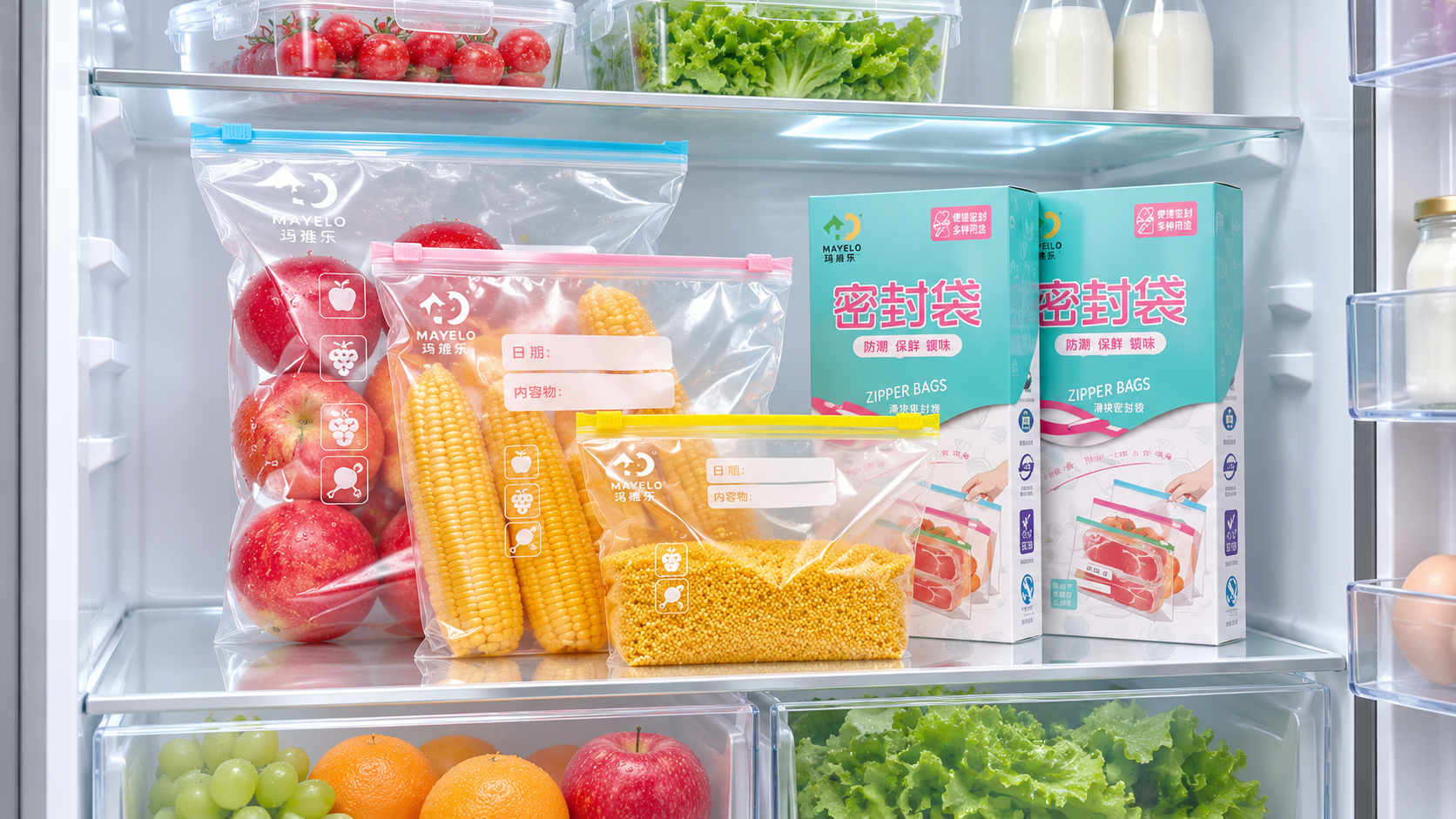
A slider zipper bag is a reclosable bag whose interlocking track is opened and closed by a small moving tab instead of by pressing the two profiles together with your fingers. For B2B buyers, that one mechanical change affects how the pack runs on a filling line, how it packs into a carton and how easily the end user can close it again. This guide focuses on a single format — the slider zipper bag — and covers how it compares with press-to-close closures, how to size and specify it, and which checks to run before a bulk order. It combines published industry buyer guidance with the published information of Taizhou Haida Plastic Packaging Co., Ltd., a manufacturer founded in July 2003 that produces food- and pharmaceutical-grade self-sealing and zipper bags. Statements about the company are identified as such; general buyer guidance is not presented as a company-specific claim.
What Is a Slider Zipper Bag?
A slider zipper bag uses the same rib-and-groove track as a standard resealable bag, plus a plastic tab that rides along the track. Moving the tab one way engages the profiles from one end to the other; moving it back opens them. The result is a one-handed closing motion with consistent pressure along the whole track, which removes the user technique that a pinch-to-close bag depends on. That is why industry guidance consistently places slider bags in applications that are opened many times — snack and frozen foods, pet food, household storage and retail sets — and why buyers consider them when children, older users or gloved staff will handle the pack. The trade-off is a moving part: the slider adds cost and a little height at the top of the bag, so it deserves a closer look during sampling.
Slider vs Press-to-Close: Which Closure Fits Your Product?
Neither closure is universally stronger. Published comparisons describe the slider mainly as easier and more consistent to close, while a press-to-close track is simpler, cheaper and flatter for carton stacking. The right choice follows the product and the user, not a general ranking.
| Consideration | Slider zipper bag | Press-to-close bag |
| Closing motion | One continuous slide, one hand | Finger pressure along the full track |
| Consistency across users | High — the tab engages the track edge to edge | Depends on pressing the whole track correctly |
| Unit cost | Higher — added component and assembly | Lower — single extrusion, no moving part |
| Carton fit | Slider adds bulk at the top | Flatter, packs tightly |
| Typical fit | Frequent reopening, premium retail, gloves | High-volume, value lines, one-time opening |
Industry sources also note that fine powders and crumbs can lodge in a track and stop it closing fully, whichever closure is used; for granular contents, ask whether the proposed slider clears debris as it moves.
Sizing: Usable Space, Fill Weight and Carton Fit
Quote and compare slider zipper bags on usable internal dimensions measured below the zipper line, not on the outside size of the bag. Buyer guides point out that the top track and the side welds consume part of the stated width and height, so two bags sold at the same outside size can hold different amounts. A slider bag needs a little extra width at the opening so rigid items pass the track without jamming. Give the supplier the product's own dimensions and packed weight and let them propose a size; an oversized bag costs more in film and takes more space in a carton, which raises freight cost per unit. Ask how many bags fit an inner pack and a master carton, because carton dimensions decide how the order loads.
Film Gauge and Slider Material: What to Put in the Spec
State thickness as a gauge in microns or mils and name the film material next to it; one mil equals about 25.4 microns. Several supplier guides warn about a common quoting trap: a buyer asks for "70-micron" bags and receives a bag measured at 70 microns across both walls together, not 70 microns per wall. Specify single-wall thickness explicitly so quotations are comparable. Match the gauge to the contents: light apparel and small accessories need far less film than hardware with sharp edges or heavy parts. On the slider itself, industry material guidance notes that nylon sliders can absorb moisture and swell in humid or cold-chain distribution, while polyacetal bodies are often suggested for wet or refrigerated products. That is general guidance, not a statement about any factory's component; ask the supplier which slider body they propose and why.
Sealing, End Stops and Repeated Opening: Checks Before Bulk Orders
A slider is a mechanical part, so samples should be tested the way the pack will be used. Buyer guides recommend filling sample bags with the real product at the real fill weight, opening and closing them repeatedly, lifting the full bag by the top, and checking the zipper and side seals for splitting. Two checks are specific to sliders. First, the end stops: pull the tab firmly against each end of the track, because weak stops are a common reason sliders come off in use. Second, the slider-to-track fit: a tab that is too loose seals poorly and one that is too tight damages the track. For freezer or chilled products, repeat the opening test cold. If a numerical limit matters, ask which test method supports it — published methods such as ASTM D3078 for leaks or ASTM F88 for peel are commonly cited for film and seals, but they describe the material and seal, not the feel of the closure, so handle the sample as well.
Food-Contact Documents and Compliance Scope
For food or pharmaceutical contents, a "food grade" claim is not a document. Buyer guidance is to request current certificates and declarations that name the facility and the product scope, then check that they cover the film, ink and adhesive actually used in the bag. Haida reports food- and pharmaceutical-grade self-sealing and zipper bag production in workshops designed to GMP principles, with annual capacity of 20,000 tonnes and reported turnover of USD 60 million. The company lists ISO9001, ISO14001, ISO22716, ISO13485, BRC, BRC-CP, BSCI, Nordic Swan, GMPc, FDA, EPA, Disney and Hello Kitty among its certifications and authorizations. Confirm the current version and scope of each document before approval. This page reports the company's published information; it does not independently verify every certificate or its present validity.
Custom Printing and Retail Presentation
Where a slider bag is sold on a shelf, the closure is part of the user experience: a single gliding motion can signal convenience and quality. Industry guidance on custom printed slider bags notes that the print layout must allow for the zipper track and the path of the slider, so artwork should be developed with the closure position in mind rather than added afterwards. Frosted film, a hang hole or a write-on panel are options discussed in the market for retail and storage formats; treat them as choices to confirm, not as standard on every bag. Any claim about reuse or environmental benefit should be tied to actual uses and local disposal conditions.
A Short Specification Checklist
Before requesting a quote, fix the closure type, usable internal size, single-wall gauge, film material, slider body, contents and fill weight, plus how many times the bag will be reopened. Add the destination market and the documents needed for food contact, then ask for samples of the exact structure and a short description of pre-shipment checks — slider travel, end stops, seal and leak checks. Keep the same specification across every quotation so prices are comparable. A slider zipper bag is a small component, but it is opened and closed by the end user, so the few extra checks at sample stage are cheaper than a complaint after delivery.
Share to:


