PE ziplock bags and PPWR: supplier data checklist
News Details
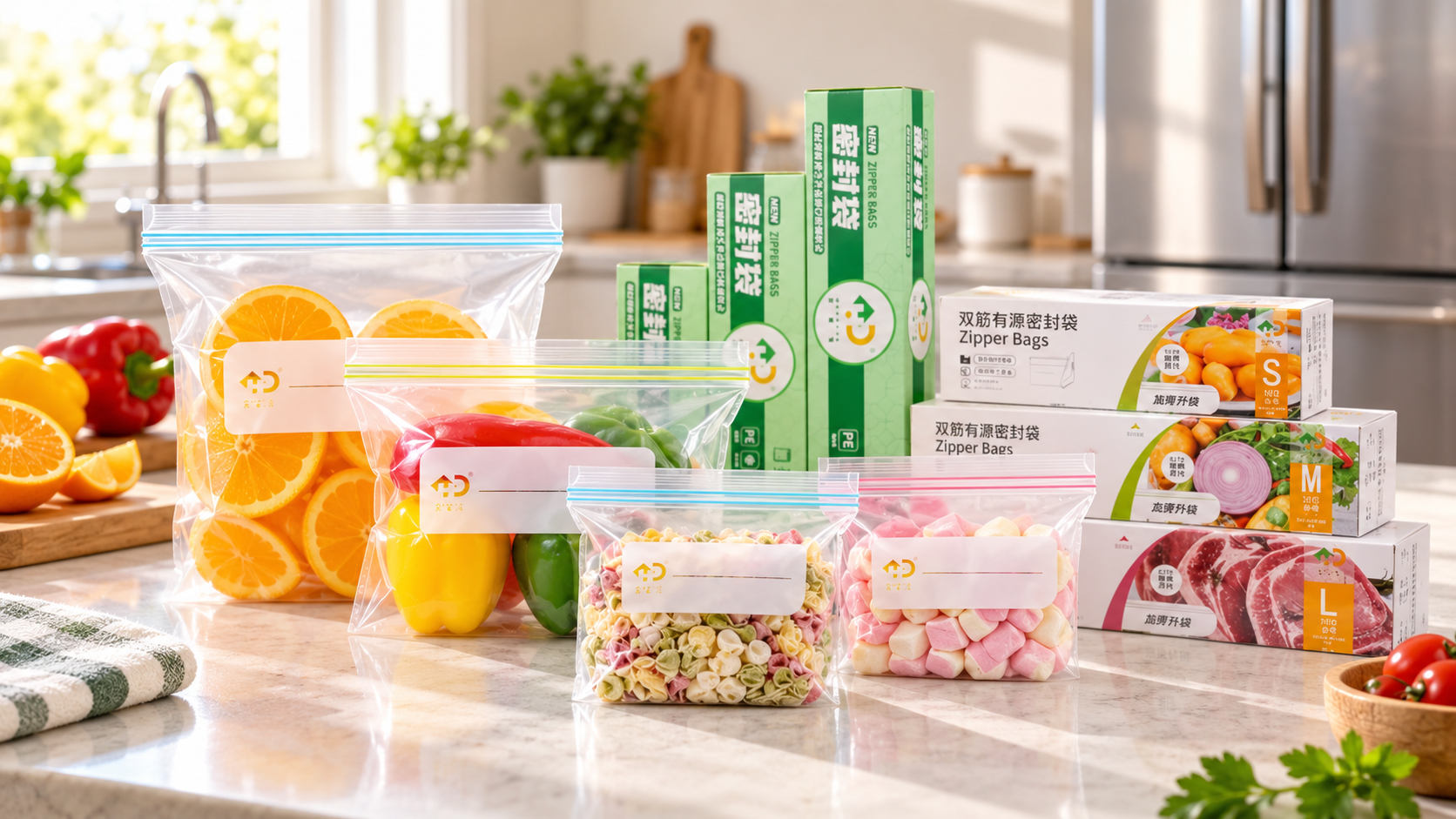
Purchasing PE ziplock bags for the European Union market involves more than just comparing prices, sizes, and seal strength. Buyers also need clear records indicating the contents of each bag, its performance, and the scope of applications covered by its test results.
The EU Packaging and Packaging Waste Regulation (PPWR) will generally come into effect on August 12, 2026. However, its requirements will be implemented in phases. Therefore, buyers should distinguish between the currently applicable regulations and those with later deadlines.
For brands, importers, and distributors, a practical PPWR packaging checklist begins with product-level data. General statements like “food-grade PE” cannot answer all questions about the finished pouch.
This guide explains which records to request from a PE ziplock bag supplier and how to review them before approving an order.
Starting Your PPWR Packaging Checklist with Intended Use
First, define the bag’s intended purpose.
The packaging bags for pre-sale food products may differ from empty storage bags sold for household use. Confirm whether the specific product falls under the PPWR definition of packaging and how it will enter the EU market. The Committee’s guidelines explain packaging definitions and business roles.
Provide the supplier with a brief usage description, including:
- Destination countries and sales channels.
- Whether the bags are shipped empty or already filled.
- Types of food, such as dry snacks, fruits, or meat.
- Contact time and storage temperature.
- Freezer, reheating, or reusable requirements.
- Bag size, closure method, and printed design.
Next, identify who will be responsible for relevant compliance tasks. Before production begins, the factory, brand owner, and EU importer should all understand their respective roles.
Request Complete PE Ziplock Bag Packaging Data
“PE bag” describes the primary material but may not encompass all components of the finished product.
Request a bill of materials linked to the specific product code. This includes the film, zipper, slider (if installed), ink, label, and any coatings or adhesives.
The following table provides a useful procurement checklist. It supports data collection; it is not a statement that each field represents a separate legal requirement.
| Requested data | Key points for buyers to check |
| Product code and version | Matched quotation, sample, and order |
| Film composition | Identification of resin types, blends, and layers |
| Sealing materials | Zipper profiles and possible sliders |
| Dimensions and thickness | Specify units, tolerances, and measurement methods |
| Finished bag weight | Including closure and other attached components |
| Weight of components | Supports material breakdown and reporting |
| Printing and label | Identify ink, label material, and adhesive |
| Recycled content | Quantities, sources, and supporting evidence |
| Packaging details | List retail packaging, cartons, and transportation materials |
For example, please clarify whether the stated thickness refers to a single-layer film or the total thickness of both layers. Also, check whether the indicated bag height includes the area above the zipper.
These details make it easier to compare PE ziplock bag packaging data across different suppliers.
Separately verify food packaging documentation
PPWR records do not replace food contact records.
For plastic bags that may come into contact with food, buyers should review the applicable EU food contact requirements, including Regulation (EC) No 1935/2004, the plastic regulations under Regulation (EU) No 10/2011, and good manufacturing practice requirements.
The plastic food contact declaration of compliance must be supported by appropriate documentation. Migration testing should also reflect the intended conditions of use.
Request:
- Current product declaration of compliance
- Supporting evidence for overall and specific migration tests (if applicable).
- Material, thickness, color, and product code of the tested sample.
- Covered food types or food simulants.
- Test temperature and contact time.
- Usage restrictions and any reusable conditions.
Then compare these records with your usage brief.
For example, evidence suitable for storing dry food at room temperature alone cannot prove its suitability for hot, greasy food. Similarly, claims about freezer bags should not be considered approval for microwave use.
A comprehensive food packaging document should link intended use, finished product, and supporting evidence.
Add material evidence to your PPWR packaging checklist
Ask the supplier how they control restricted substances throughout the bag production process.
According to PPWR, food contact packaging will be subject to PFAS limits starting August 12, 2026. This regulation also sets combined limits for lead, cadmium, mercury, and hexavalent chromium in packaging, subject to applicable exceptions. Supporting evidence must be included in the technical documentation.
An effective supplier evaluation should include:
- Declaration of resin and additives.
- Information on inks, coatings, and processing aids.
- Basis for any PFAS compliance statement.
- Relevant testing methods, sample details, and detection limits.
- Procedure for reviewing material changes.
A statement that PFAS was “not intentionally added” may be helpful for evaluation. However, this alone does not prove that the finished packaging meets all applicable concentration limits.
If testing is used to support the assessment, ensure that the testing method can measure the substances and concentrations being evaluated.
Carefully review recyclability and recycled content
PE construction is useful information, but the name of the resin alone is insufficient to prove the recyclability of the finished bag.
Request detailed information on each component, including zippers, sliders, prints, and labels. Then, request the methods and assumptions behind any recyclability claims.
The PPWR’s requirements regarding recyclability and recycled content will be implemented at later dates and depend on relevant provisions and enforcement measures. Do not treat all future requirements as already applicable to all bags.
For procurement decisions, please ask:
- Has the assessment covered the entire bag?
- Which market and collection system does this claim refer to?
- Could the assessment be affected by changes in printing, labels, or closures?
- What evidence supports the stated percentage of recycled content?
For food contact bags, recycled plastics also require separate food safety assessments. A claim of recycled content does not establish its suitability for direct food contact. EU regulations specifically regulate the use of recycled plastics in food contact materials.
Additionally, do not assume that a resealable closure automatically qualifies the packaging as reusable under the PPWR. For any such claim, evidence must be provided.
Request Traceable Records from Your PE Ziplock Bag Supplier
Good records should enable buyers to trace the bags they receive back to their approved specifications.
Create a file index for each SKU. List specifications, material breakdown, declarations, test reports, approved designs, and sample references.
For packaging within the scope of application, PPWR requires manufacturers to prepare technical documentation and conduct appropriate conformity assessments. The EU Declaration of Conformity is an integral part of this process, distinct from the food contact Declaration of Compliance.
Also, agree on a written change control process. Request that the supplier notify you before making changes to the following:
- Resin grade or material source
- Film structure or thickness
- Zipper or slider material
- Ink, additive, coating, or label
- Production processes that may affect compliance.
Do not just accept the report because it has a recent date. Check if it still applies to the product being supplied.
Apply Checklist to Haida PE Ziplock Bags
Haida’s product line includes double-zipper freezer bags, slider zipper bags, stand-up bags, and bags with writable areas. Its website also lists customized and OEM/ODM options. These features provide buyers with multiple starting points for food storage and retail projects.
When evaluating Haida’s double-zipper freezer bags, please request records for the exact size, material structure, closure type, and printing option you plan to order.
For slider bags, include the slider in the material review. For printable areas, include relevant information on inks or coatings. For freezer applications, confirm the storage conditions supported.
Product descriptions help narrow down the choices. Final approval should be based on SKU-specific evidence.
Use your PPWR packaging checklist before approving an order
Before placing an order, have the procurement, quality, and compliance departments jointly review it. Resolve any discrepancies while specifications can still be adjusted.
A complete supplier file should connect five elements: intended use, approved samples, material data, supporting evidence, and production batches.
To discuss projects with Haida, please provide information on your target market, food types, storage conditions, bag dimensions, and closure requirements. Then, use this PPWR packaging checklist to confirm the documents required before shipment.
Clear data can make supplier comparisons more effective and help buyers approve PE ziplock bags with greater confidence.


