Compostable Zipper Bags vs PE Bags: A Practical Comparison for Food Brands
News Details
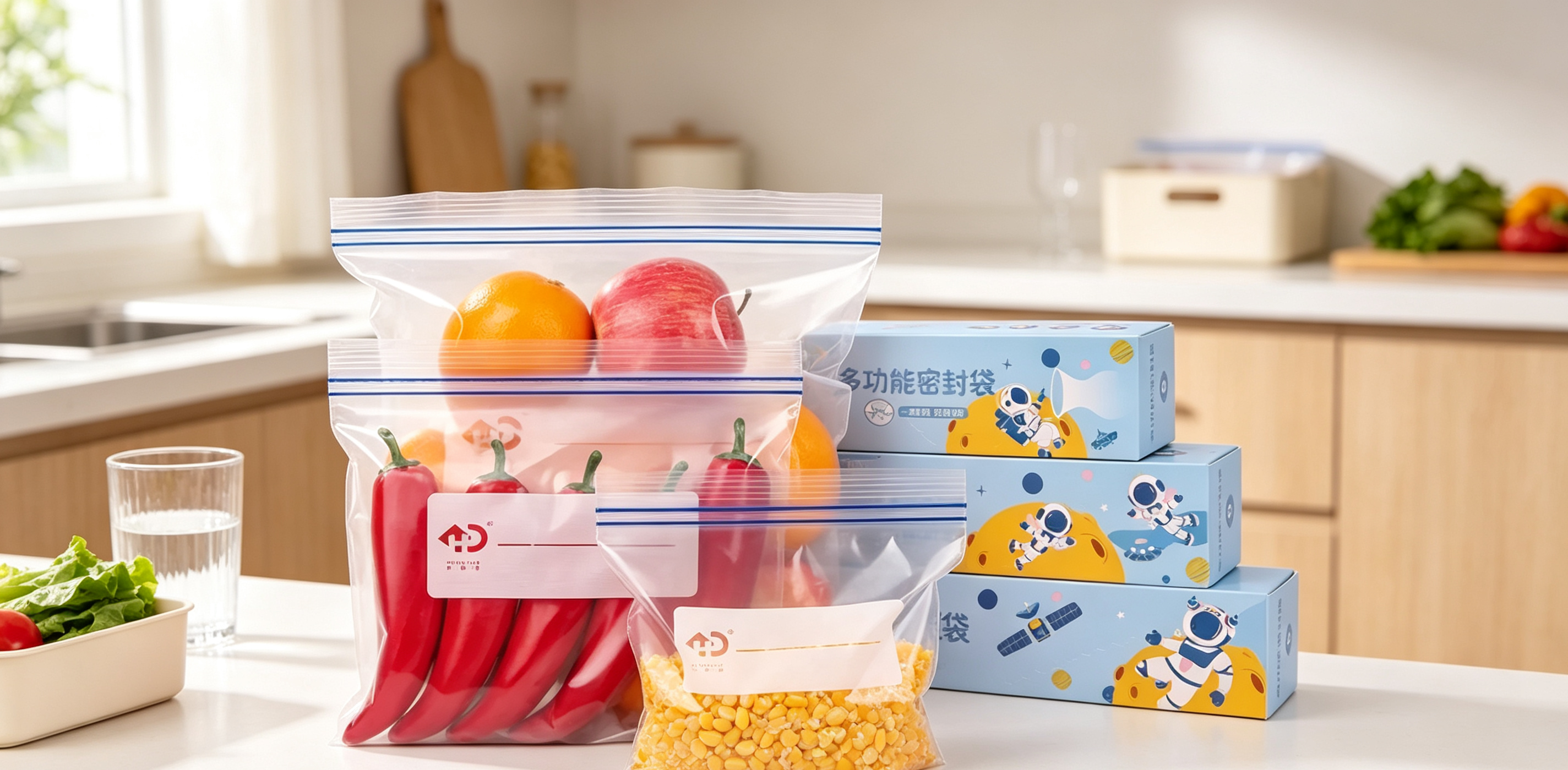
Food brands face increasing pressure to upgrade packaging options. Consumers desire minimalist design, reliable sealing performance, food-safe materials, and reduced environmental impact. At the same time, brands require packaging that protects food integrity, integrates smoothly with filling line operations, and stays within budget parameters.
With these priorities, many purchasers compare compostable zipper bags versus PE bags before launching a new project. Both solutions have merit, but they address distinct requirements. The optimal selection depends on product type, desired shelf life, filling processes, local waste infrastructure, and core brand positioning.
Haida is a manufacturer of food-grade packaging bags in China. The company supplies zipper bags, slider bags, freezer bags, double zipper bags, and custom flexible packaging for wholesale and OEM/ODM purchasers. For food brands, Haida assists in aligning material selection, closure type, dimensions, printing specifications, and packaging formats with practical product applications.
Defining CompostableZipper Bags?
Compostable zipper bags are manufactured from materials engineered to decompose under controlled composting environments. Some are formulated for industrial composting facilities, while others may carry home composting claims when certified for that specific application.
These bags are often adopted by brands aiming to communicate a clear sustainable packaging commitment. They may be appropriate for dry goods, snacks, fresh produce, and certain perishable products with short shelf lives.
It is important to note, however, that "compostable" does not guarantee breakdown in natural settings, landfills, or marine environments. In most cases, the bag requires specific temperature, moisture levels, timeframes, and active composting infrastructure. Therefore, brands should verify precise certifications and disposal pathways before making compostability claims.
What Are PE Food Packaging Bags?
PE bags are manufactured from polyethylene. They are widely utilized for food storage, freezer bags, zipper bags, slider bags, produce bags, and deli packaging. Polyethylene is favored for its flexibility, tensile strength, transparency, and cost efficiency.
For food brands, PE bags deliver reliable sealing, moisture barrier properties, and cold storage performance. They can also be produced in diverse formats, including standard zipper bags, double zipper freezer bags, slider bags, stand-up pouches, and custom printed bags.
In certain regions, PE mono-material constructions may support recyclable flexible food packaging initiatives, contingent on local collection and recycling capabilities. This makes PE a pragmatic choice for brands seeking both functional reliability and a more straightforward recycling route.
Core Distinction: End-of-Life Management
The most significant difference lies in appropriate post-use disposal.
Compostable zipper bags are engineered for composting, but they depend on access to suitable composting infrastructure. If local composting facilities are unavailable, the environmental benefit is diminished. Additionally, compostable packaging should not enter conventional plastic recycling streams, as it can compromise the quality of recycled resin.
PE bags are designed for plastic applications and, in some contexts, recycling. However, flexible plastic recycling viability depends on municipal regulations, material cleanliness, and collection accessibility. Food residue can further complicate recycling efforts.
Thus, the foundational question is: how will end users dispose of the bag? If your target market supports composting systems, compostable bags may align with your goals. If your market has established flexible plastic collection programs, PE mono-material bags may be the preferable option.
Food Preservation and Shelf Life
Packaging's primary function is to safeguard the product. If packaging fails, food waste increases—undermining both economic and sustainability objectives.
PE bags typically excel in moisture control, freezer compatibility, and everyday food storage. They also offer sufficient tensile strength for numerous zipper and slider closure systems. For meal prep, fruits, vegetables, cheese, deli items, and frozen foods, PE represents a time-tested solution.
Compostable zipper bags may be better suited for dry or short-shelf-life items, depending on the specific material formulation. However, some compostable films exhibit different moisture, oxygen, heat resistance, or mechanical properties compared to PE. Consequently, brands should conduct real-world testing with their actual product prior to commercial launch.
For greasy, wet, frozen, sharp-edged, or heavy products, material selection warrants particularly rigorous evaluation.
Closure System Performance
The zipper or slider mechanism is integral to user experience. A bag may be aesthetically pleasing, but if the closure is weak, difficult to engage, or prone to leakage, customers will notice immediately.
PE zipper bags are ubiquitous because the film and zipper components can be reliably matched. Double zipper PE bags offer enhanced sealing for freezer and meal preparation applications. Slider PE bags are also popular due to their ease of opening and closing.
Compostable zipper bags can also incorporate resealable closures, but the closure material and bag film must be chemically compatible. Purchasers should verify seal strength, performance after repeated open/close cycles, filling line speed compatibility, and storage stability.
In essence, the closure must align with both the food product and user expectations. Convenience is valuable, but sealing integrity is non-negotiable.
Food Contact Compliance
Food contact safety is mandatory for both compostable and PE bags. Environmental claims do not substitute for required food safety documentation.
Purchasers should request food contact compliance documentation tailored to the target market. This may include certificates for base resins, additives, inks, adhesives, zipper components, slider mechanisms, and any color masterbatch.
For PE bags, food-grade polyethylene is commonly used for direct food contact applications. For compostable bags, purchasers should confirm that each component is approved for the specific food type and intended temperature range.
Additionally, if the bag will contain fatty, acidic, frozen, hot, or moist foods, this should be communicated to the supplier in advance. Testing requirements may vary based on the specific use case.
Cost Structure and Supply Chain Reliability
Cost is another critical determinant. PE bags are typically more economical due to mature material supply chains and established manufacturing processes. They also offer consistent availability, extensive size options, and flexible custom printing capabilities.
Compostable zipper bags generally command a higher price point. Material supply may also be less consistent, lead times potentially longer, and additional pre-launch testing often required.
That said, compostable bags can elevate premium brand positioning in markets where composting is valued and disposal pathways are well-defined. In such contexts, the incremental cost may be justified for select product lines.
Many brands adopt a hybrid approach. They utilize PE bags for freezer, wet, and high-strength applications, while piloting compostable bags for dry or short-shelf-life products.
Printing Capabilities and Shelf Visibility
Both PE and compostable zipper bags can accommodate custom printing. However, the printing technology must be compatible with the specific substrate.
For PE bags, printing is standard for retail packaging, private label products, foodservice portions, and storage bag retail boxes. Brands can leverage clear windows, bold color blocks, adhesive labels, and concise usage instructions.
For compostable bags, printing must be evaluated for ink compatibility, odor transfer, adhesion durability, and impact on compostability. If the bag requires compostable certification, inks and other ancillary components may also need to meet corresponding standards.
In both scenarios, claims should be transparent and substantiated. Avoid vague assertions that cannot be verified. Use terminology consistent with test reports, technical data, and local regulatory requirements.
Purchaser's Practical Evaluation Checklist
Before deciding between compostable zipper bags versus PE, consider the following:
What food product will be packaged?
Is the food dry, moist, oily, frozen, or does it contain sharp elements?
What is the required shelf life?
Does the application require a standard zipper, double zipper, or slider closure?
Will the product be sold through retail, wholesale, or foodservice channels?
Which food contact regulations apply in the target market?
Do end users have access to composting facilities?
Do end users have access to flexible plastic recycling programs?
What claims can be supported by official documentation?
What is the target unit cost per bag?
Can the supplier provide samples for real-world application testing?
Addressing these questions early helps purchasers avoid costly material selection errors.
When Compostable Bags Are Appropriate
Compostable zipper bags may be suitable when a brand has a robust sustainable packaging strategy and the target market supports composting infrastructure. They may also work well for dry goods, fresh produce, light snacks, or perishable items with short turnover cycles.
They are also valuable for brands launching premium product lines to test market response. However, purchasers should confirm certification status, food contact compliance, closure strength, printing safety, and shelf life stability before full-scale production.
When PE Bags Are the Better Choice
PE bags may be preferable when mechanical strength, moisture resistance, freezer compatibility, optical clarity, and cost control are paramount. They are often the optimal choice for meal prep, fruit storage, deli items, frozen foods, household organization, and private label food packaging.
PE mono-material designs can also support recyclable flexible food packaging initiatives in regions with appropriate recycling infrastructure. For many food brands, this strikes a practical balance between performance, cost, and environmental responsibility.
Why Partner WithHaida
Haida boasts over 20 years of specialization in self-sealing bags and zipper bags. According to Haida's official website, the company operates from a 50,000 m² manufacturing facility, features GMP-compliant production workshops, has an annual production capacity of 20,000 tons, and maintains quality systems certified under ISO9001, BRC, BSCI, FDA, and Disney-related audits.
For B2B purchasers, this means Haida can support custom food packaging projects from initial design through mass production. The company offers zipper bags, slider bags, double zipper freezer bags, stand-up pouches, and tailored OEM/ODM solutions for food brands, retailers, and distributors.
Whether you are evaluating compostable zipper bags versus PE or developing a comprehensive recyclable flexible food packaging program, Haida can assist in comparing materials, closure systems, dimensions, printing options, and filling methods based on your specific operational requirements.
Summary
Compostable zipper bags and PE bags each offer distinct advantages. Compostable bags can reinforce strong environmental positioning when composting infrastructure is accessible and claims are fully substantiated. PE bags provide proven durability, sealing integrity, transparency, and cost efficiency—especially for freezer storage and everyday food packaging applications.
The optimal decision extends beyond material nomenclature. It encompasses food safety assurance, shelf life performance, user convenience, local waste management capabilities, and holistic packaging functionality. For food brands, the prudent approach is to test samples rigorously, verify compliance documentation, and select the packaging solution that best aligns with the product, market, and customer base.


